


We turn your business essence into long lasting,
memorable brands and visual identities
We design digital products that make complex things easier to understand and use.
Make complex things feel simple
Understand the problem first.
We get close to the problem. That means understanding the people using the product, the people responsible for delivering it, the systems already in place and the organisational constraints around them. We use research, stakeholder engagement and strategic thinking to define what the experience needs to achieve before deciding what it should look like.
Design the experience, not just the screens
We work out how information, tasks and interactions should fit together before we focus on visual design.
That might mean restructuring complex content, mapping a process, prototyping a new service or testing a new way for people to interact with a system.
By the time we move into UI, the interface is responding to a considered experience rather than decorating an unresolved one.
Make it feel obvious
The final interface should feel clear, polished and intuitive.
We bring brand, accessibility, interaction and responsive behaviour together so people can understand what to do without having to think too hard about the system underneath it.
UX strategy + discovery
We help organisations define the problem before committing to a solution.
That means understanding users, business requirements, existing systems and constraints, then establishing a clear direction for what needs to be designed.
For complex projects, discovery can also bring different internal perspectives into alignment before development begins.
User research + stakeholder engagement
We talk to the people who use the service and the people responsible for delivering it.
That helps us understand behaviour, expectations, pain points and operational realities, rather than designing around assumptions.
This is particularly important in government and complex organisations, where a digital experience often needs to satisfy very different user and stakeholder needs at once.
Information architecture
We organise complex information so people can make sense of it.
That can mean restructuring a large content environment, defining relationships within a dataset or working out how different user groups should move through the same product.
Good information architecture is often invisible. People simply find what they need.
User journeys + interaction design
We map how people move through a task, where decisions happen and where friction is introduced.
That gives us a clearer view of what the product needs to do and where the experience can be simplified.
Wireframes + prototyping
We use prototypes to work through ideas before they become expensive to change.
Early wireframes help resolve structure and flow. More detailed prototypes allow us to test interactions, demonstrate behaviour and give stakeholders something real to respond to before development begins.
UI + digital design systems
Once the experience is resolved, we design the interface.
We apply the brand with care, define interaction patterns and create reusable components that keep the product consistent as it grows.
For larger products, we can develop design systems that support both current delivery and future development.
Usability testing
We test ideas with real people where it will improve the outcome.
Watching someone use a product often reveals things that workshops and internal reviews cannot. We use that evidence to refine the experience rather than relying on instinct alone.
Accessibility + inclusive design
Accessibility is considered throughout the design process, not added at the end.
We consider navigation, hierarchy, interaction, colour, typography and responsive behaviour against relevant WCAG requirements, while recognising that accessible design generally improves the experience for everyone.
Digital product design
Not every digital problem needs to become a website.
We design portals, platforms, tools and applications built around particular tasks or services.
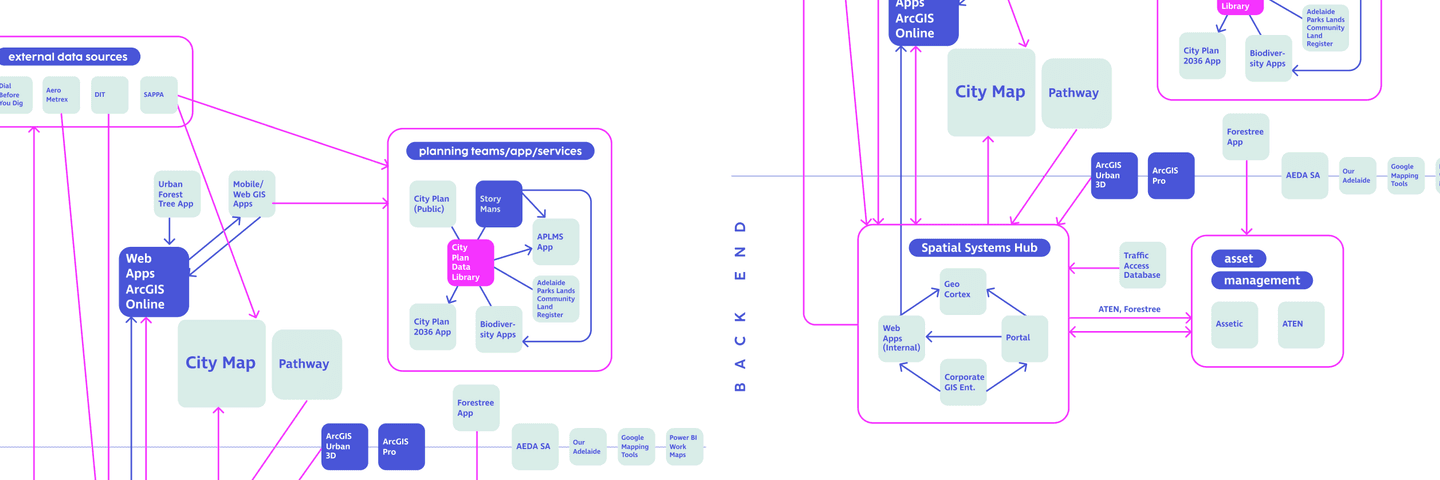
Some are simple. Others involve complex data, workflows, dashboards, search or connections with other systems. The role of UX is the same: make the experience clear despite the complexity underneath it.
Where a product requires custom development, automation or AI, we work across our AI + Bespoke Systems capability to take it further.
Design + development together
Our designers and developers work together throughout the project rather than treating design and build as separate phases.
That gives us space to test ideas properly, understand technical implications early and protect the intent of the UX through development.
You don't need to know what the solution is yet
Sometimes the starting point is simply that something is difficult to use, inefficient or no longer fit for purpose.
Sometimes there is an idea for a new digital product, but the shape of it is still unclear.
That is enough to begin.
Bring us the problem. We’ll help work out the experience.
Words from clients
Was an absolute pleasure to work with the Studio Veld team on this!
Couldn’t have asked for a better result allowing us to engage with a range of readers on the importance of Biodiversity in the Adelaide Park Lands!
Bravo Studio Veld! 👏🏻👏🏻
- The City of Adelaide